Start with the right questions
Choose the cooking method, preparation space and entertaining routine before selecting outdoor equipment. The design must also account for the site, weather exposure and services.
- List the appliances and the way they are used.
- Plan preparation, serving, waste and storage.
- Review shade, ventilation and service access with the appointed specialists.
Coordinate equipment before masonry
An attractive counter is only one part of the installation. Final appliance information should guide clearances, materials and connections. Agree who supplies, installs and commissions each item, and how equipment can be removed for maintenance without dismantling the entire kitchen.
What to ask for
Before agreeing the next stage, request the following information in a form you can review with your project team.
- A confirmed equipment schedule
- A services and installation responsibility list
- A maintenance access plan
Describe cooking and serving as one routine
List the intended cooking methods, number of people normally served and the way food moves between indoor and outdoor spaces. Include preparation, plating, drinks, waste and clearing up. An equipment wish list can miss these supporting tasks. Decide whether the outdoor kitchen is a full working area or primarily a cooking point supported by the indoor kitchen. That choice influences how much counter, storage and equipment is useful.
Select equipment with its installation information
Confirm the actual models and ask the appointed specialists to review the relevant requirements for clearances, ventilation, connections and surrounding materials. Do not assume indoor equipment or a visually similar alternative is suitable for the proposed setting. Keep manufacturer information linked to the current layout. Gas, electrical and other technical work must remain with appropriately appointed professionals; this planning guide is a brief for their review, not installation instructions.
Planning example: a compact cooking and dining terrace
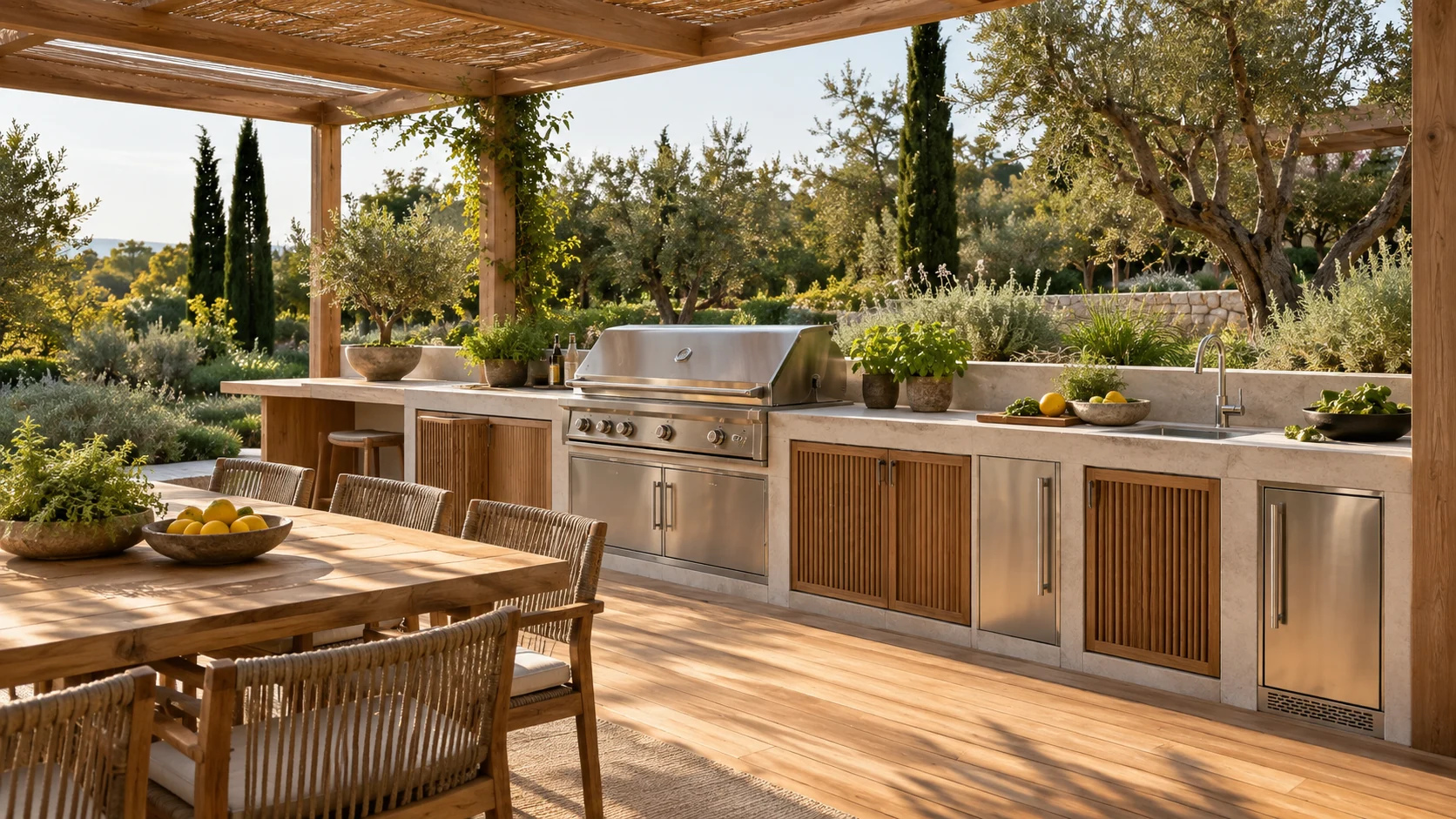
Imagine a terrace used mainly for relaxed meals with a small group. A large line of equipment could reduce the useful dining area and make serving awkward. Compare a focused cooking point with a larger arrangement, using the actual appliance information and movement routes. Review where hot items, preparation and guests will be positioned. The example shows why equipment quantity should follow the household's routine rather than a desire to include every available appliance.
Keep maintenance and replacement possible
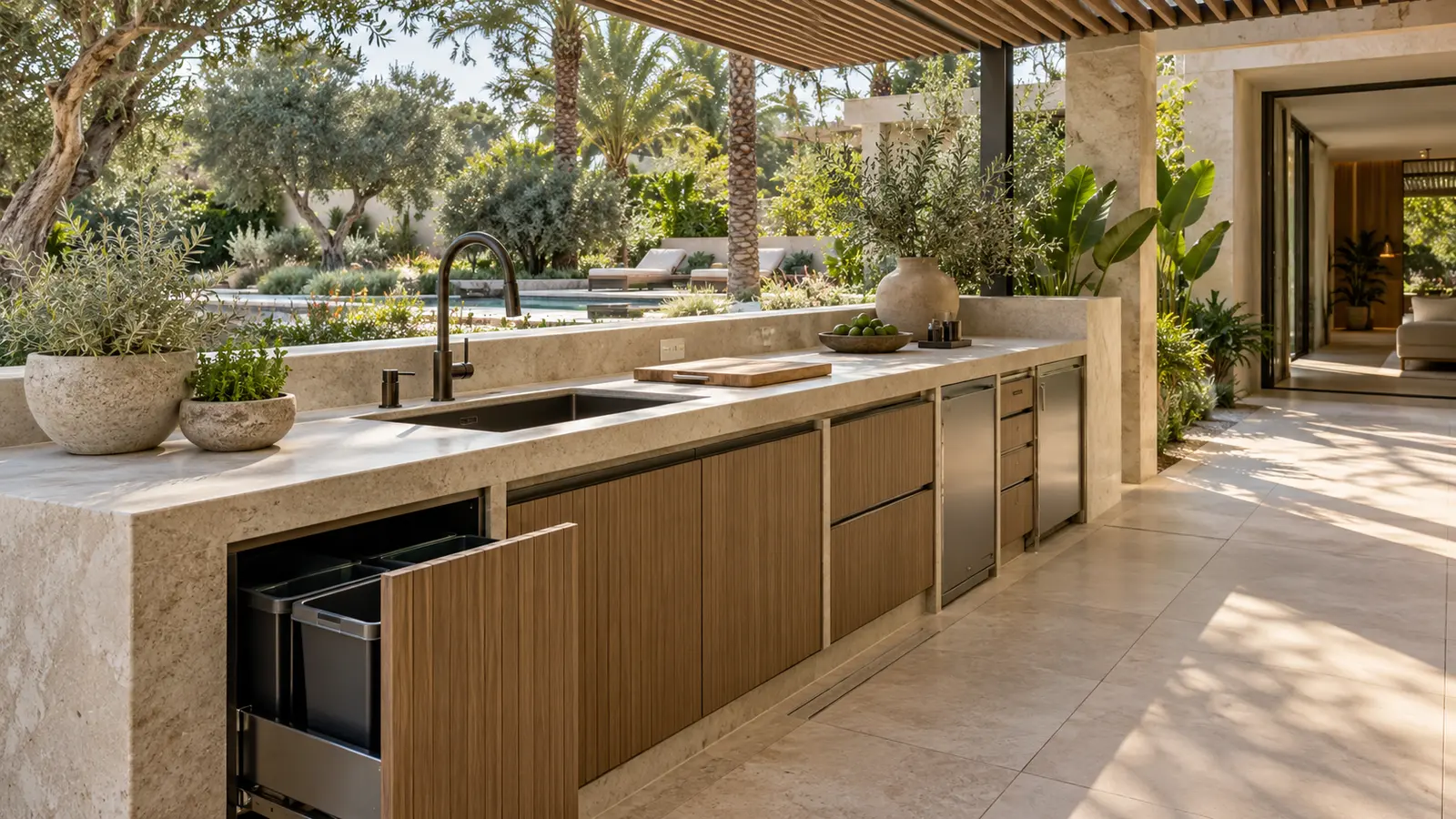
Ask how equipment is serviced and removed if it needs replacement. Review doors, access panels and the relationship between the appliance and surrounding construction. Concealing everything may create an attractive elevation while making future work unnecessarily disruptive. Agree which parts of the scope include installation, commissioning and operating demonstrations. Keep the final model and support details with the handover information so the household can identify the correct responsible party later.
Compare the whole installation package
The appliance price is only one part of the project. Review supporting construction, surfaces, services, protection and making good in the proposal. Identify what is supplied by the owner and what is supplied by the appointed contractor. Coordinate shade and the wider outdoor setting through the relevant specialists. If the equipment changes, review the connected work before accepting the substitute; the final arrangement should remain a coordinated system rather than a collection of independently purchased items.
Bring the brief to a specialist
Share your location, current photographs, approximate dimensions and priorities. A scoped review can then identify the information needed for a useful proposal. Product choices, project dates and final prices should follow the actual property and agreed specification.
Make this useful for your project.
A review of your property and priorities can turn general guidance into a defined brief.
Explore cost guidanceDiscuss your project