Describe the exposure
Sheltered terraces, open garden paths and poolside areas experience different conditions. Identify sun, water, dust and contact in the brief, then ask suppliers to confirm product suitability for each location. A material used successfully indoors should not be assumed suitable outside without that review.
Ask how the appearance changes
Some materials change tone or texture with use and exposure; others depend on a particular care routine to maintain their intended appearance. Review the exact product information and comparable examples where available. The decision should reflect whether the household welcomes that change and can support the required maintenance.
Coordinate the supporting detail
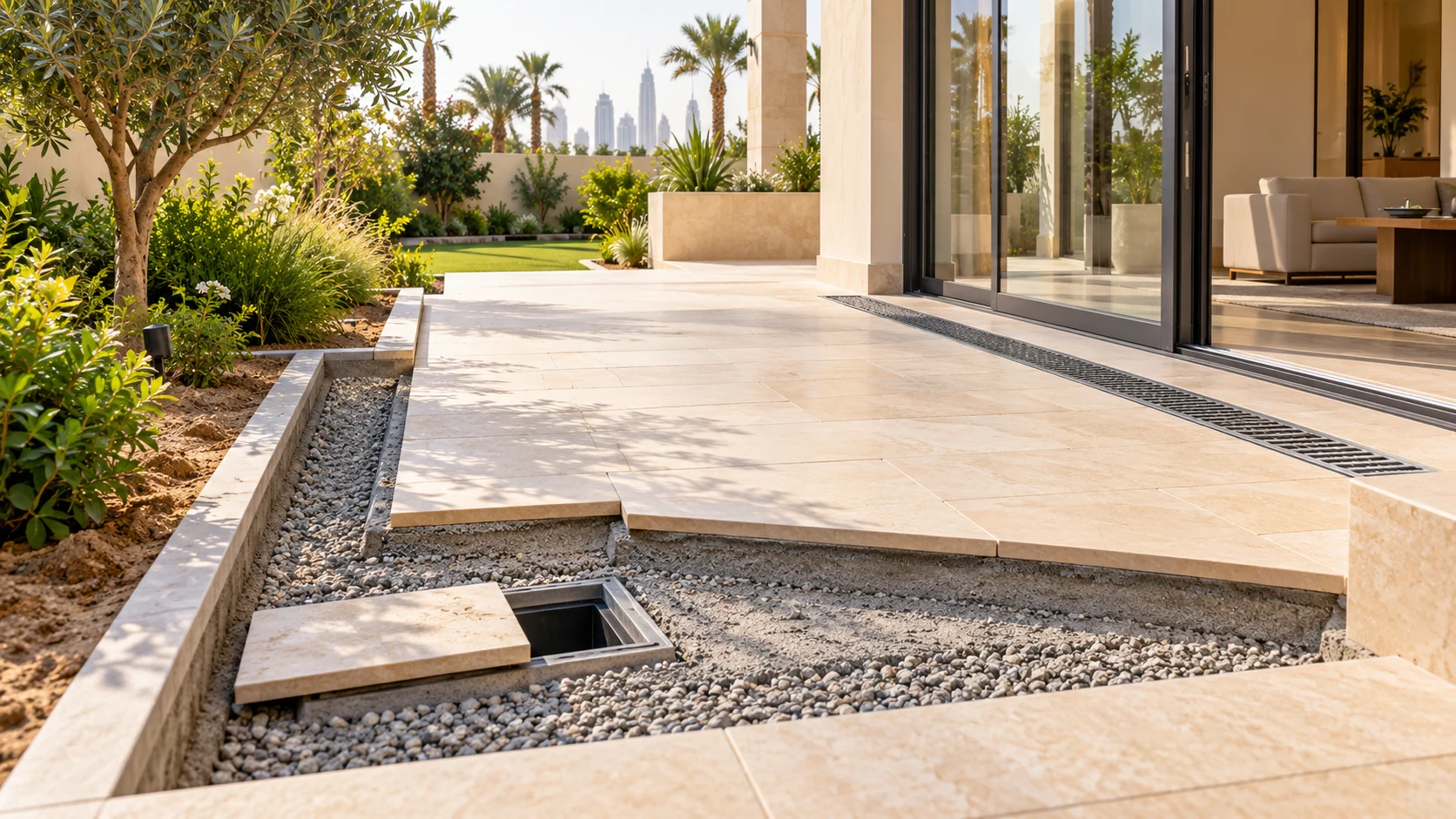
The substrate, fixings, joints, drainage and edges influence how the visible finish performs. Plan service access and replacement routes, especially where equipment sits beneath or behind finishes. Keep the supplier’s care instructions with the handover record so future cleaning or repair does not rely on guesswork.
A planning scenario
Imagine a fictional terrace with a covered dining zone and an exposed route to the garden. The palette is reviewed for both conditions, including the supporting construction and care routine. The same visual theme may be maintained with different product details where the use requires it.
A useful review checklist
Use these prompts to turn the discussion into a record that can be compared with drawings, supplier information and the project scope. Mark what is confirmed, who needs to respond and when the decision is required.
- Map exposure by location
- Confirm the exact product’s suitability
- Discuss expected weathering
- Review joints and drainage
- Keep care and replacement information
Describe the exposure in each location
Identify surfaces exposed to sun, regular wetting, cleaning, planting and contact with furniture or equipment. Conditions can vary significantly within one garden. Ask suppliers to address the actual intended application and provide current product information. A material that works in a sheltered wall position may need a different review as a horizontal surface in frequent use. Avoid choosing solely from a sample displayed in a controlled indoor environment.
Discuss the appearance over time
Ask the supplier how the selected finish may change with normal exposure and what maintenance affects that appearance. Distinguish expected variation from a defect, while recognising that an actual concern still needs assessment. Review photographs or samples supplied for the exact product where available, without assuming another material behaves identically. The household should understand whether the desired look depends on a care routine it is willing and able to maintain.
Review the junctions and supporting details
Edges, joints, fixings and adjacent materials influence both appearance and practical performance. Have the relevant designers coordinate those relationships with drainage and access requirements. An attractive surface cannot compensate for an unresolved supporting detail. Keep the specification and installation responsibilities explicit, and review substitutions across the complete arrangement. This is especially useful where several trades meet at a terrace edge, planter, outdoor kitchen or door threshold.
Make care information location-specific
Record the installed product and finish in each area and retain the manufacturer's guidance. Identify who handles routine care and which concerns should be referred to a specialist. Ask about appropriate spare materials or replaceable components when useful. If a surface is refinished or replaced later, update the record. A practical care plan helps the garden age in a considered way rather than relying on memory or generic cleaning advice.
Carry the decision through to delivery
Keep the accepted decision with the current scope and drawings. If a product, layout or responsibility changes, record the effect on the other work before purchasing or proceeding. At completion, retain the relevant operating and care information with the project record. The next conversation is more useful when the unresolved questions are visible.
Sources & further reading
Make this useful for your project.
A review of your property and priorities can turn general guidance into a defined brief.
Explore Terraces and deckingDiscuss your project