The direct answer
Outdoor-lighting commissioning should test the garden after dark as a sequence of real activities: arriving, walking routes and steps, dining, relaxing, viewing the landscape from inside, cleaning and securing the property. Review whether light is useful, targeted, low enough for the task, controlled by the right scenes and appropriately warm for the design. Then check glare, reflections, spill, aiming, dark gaps, controls, maintenance access and final records. A switch-on test confirms that fittings operate; commissioning confirms that the installation supports the intended experience without creating avoidable brightness or visual discomfort.
Prepare before the night review
Commissioning starts in daylight. Confirm that specified fittings, optics, accessories and controls are installed in the recorded locations. Check visible damage, finish, planting clearance and access to drivers, junctions and controls. Obtain the current lighting plan, circuit and control schedule, product information and any specialist test records. Make a list of agreed scenes and the areas each scene serves. Do not bury adjustable fittings behind new planting or leave access dependent on moving heavy furniture. Electrical inspection and testing remain with the responsible qualified parties under the applicable project requirements.
- Current lighting and control drawings
- Installed fitting and accessory schedule
- Daylight condition check
- Safe maintenance access
- Agreed scenes and responsible reviewer
Walk routes at the pace people use them
Start at the arrival point and walk every regular route in both directions. Look at changes of level, step edges, thresholds, gates, corners and the transition from bright interior spaces to the garden. The aim is clear orientation without turning the path into an evenly flooded corridor. Check whether shrubs or furniture cast unexpected shadows and whether a fitting shines into the eyes on approach. Repeat the walk from seated eye level where terraces or lounge areas face the path. Record the exact fitting and viewing position for each comment so adjustments are repeatable.
Review glare, spill and reflections
Stand at windows, dining seats, pool edges and neighbouring boundaries that can be reviewed from the property. A well-aimed tree light can still become uncomfortable if its source is visible from a chair. Polished paving, glass and water can reflect more light than expected. DarkSky International and the Illuminating Engineering Society frame responsible outdoor lighting around usefulness, targeting, low levels, controls and warm colour. Use those principles as a decision framework, then apply the project’s actual design and applicable requirements. Shield, aim or reduce light through the specified equipment and specialist adjustment rather than improvised covers.
- Visible light sources from normal viewpoints
- Light crossing property boundaries
- Reflections from glazing, paving and water
- Brightness competing with the intended focal point
- Unnecessary upward or outward light
Planning example
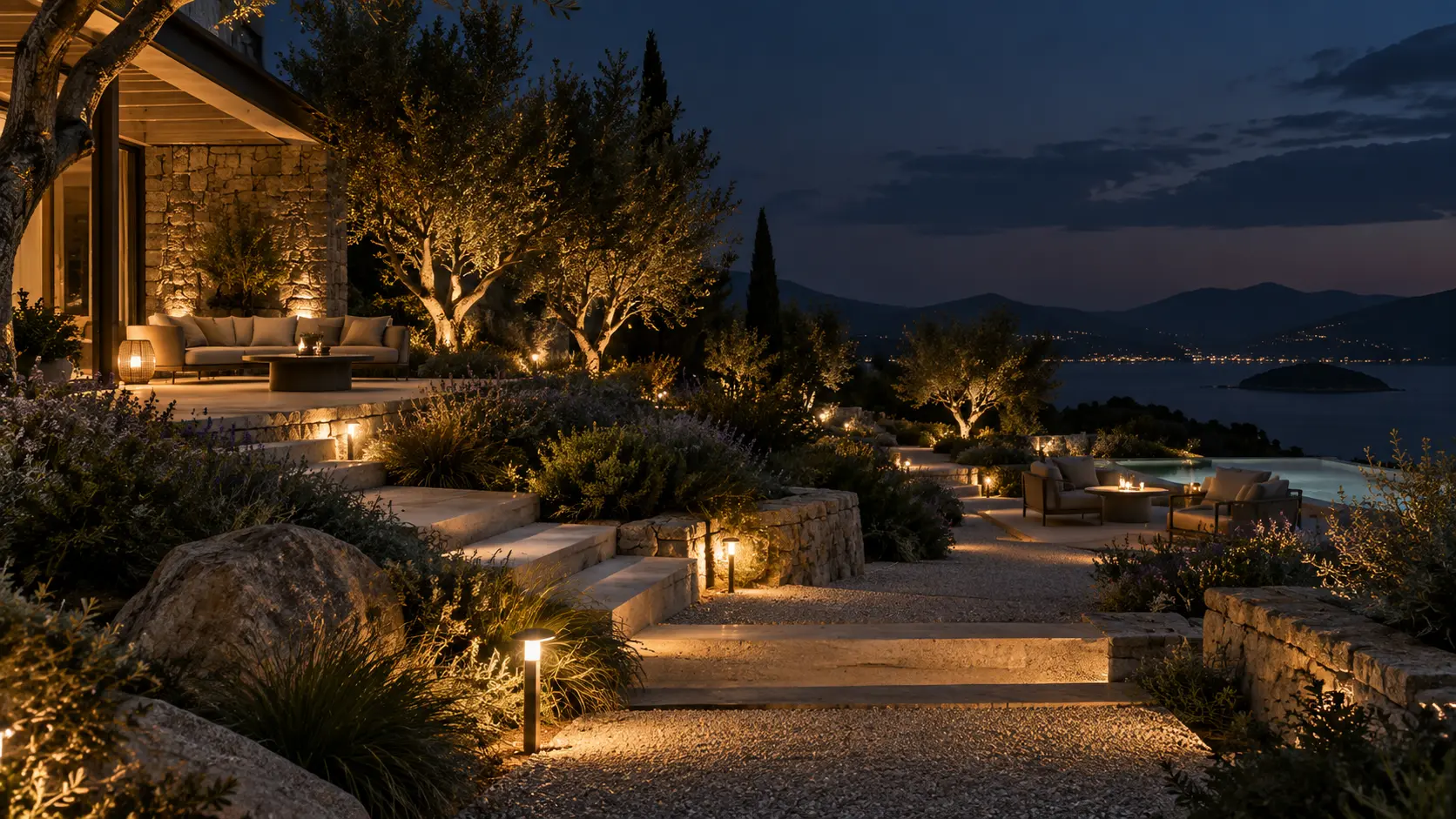
A villa garden has a dining terrace, three steps to a path and two mature trees. On the first night review, the tree uplights dominate the scene, a path light creates glare from the dining chair and the step lighting switches with the decorative scene only. The team lowers the tree-light output, re-aims it within the canopy, changes the path fitting’s orientation and separates the step circuit into the everyday route scene. The designer then checks the view from the living room and the approach from the gate. The final record notes each fitting position, aim, control group and accepted setting so later maintenance can restore the intended result.
Test controls as real scenes
Operate each scene from the controls people will actually use. Common groups may include arrival, everyday route, dining, quiet evening, cleaning and all-off, but the project brief should determine the final set. Check time clocks, sensors and astronomical schedules against the intended behaviour and confirm a simple manual override. Avoid controls that require occupants to understand technical circuit names. Review what happens after a power interruption and which settings are retained. If remote access is included, record account ownership and support responsibility without exposing credentials in the handover documents.
- Clear user-facing scene names
- Manual override
- Time and sensor behaviour
- Power-restoration behaviour
- Administrator and support ownership
Record the final installation
The handover pack should include the current plan, fitting and lamp schedule, circuit and control schedule, driver locations, scene settings, aiming notes, product instructions and agreed maintenance access. Photograph adjustable fittings from a consistent reference and record changes made during commissioning. Explain cleaning, vegetation clearance and safe access through the responsible maintenance team. The final night review should take place after major planting and furniture are in position, because both can change the light. If planting is expected to grow across a beam, assign a future review rather than setting excessive brightness on day one.
- As-installed location and circuit
- Final aiming and output setting
- Control group and scene
- Driver and junction access
- Maintenance and seasonal review
Limits and next step
This guide does not define electrical compliance, emergency lighting, security performance, ecological requirements or authority approval. It also cannot replace a lighting designer’s calculations or the exact fitting instructions. Before handover, schedule one coordinated night visit with the owner representative, lighting designer, landscape designer, electrical contractor and controls specialist as relevant. Bring the approved brief, walk the property in sequence, make controlled adjustments and repeat the key views. Close the record only when the route scenes, focal lighting, controls and maintenance information match the agreed design.
- Inspect in darkness after planting
- Walk all user routes
- Check glare and spill from fixed viewpoints
- Test every scene and override
- Issue the final aiming and control record
Sources & further reading
Make this useful for your project.
A review of your property and priorities can turn general guidance into a defined brief.
Explore Outdoor lightingDiscuss your project